


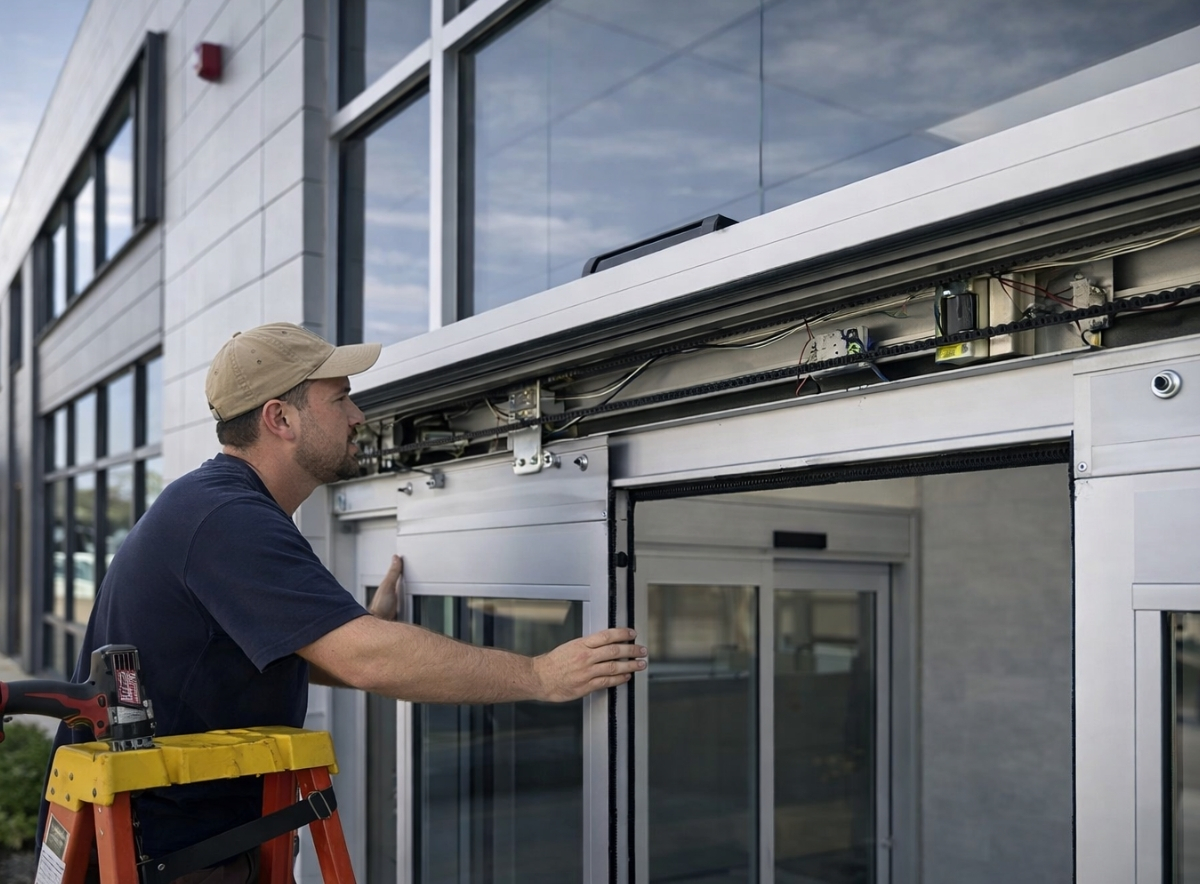
Automatic doors play a critical role in how buildings function day to day. From managing high-traffic entrances to supporting secure access points, these systems operate continuously throughout the working day. When they perform correctly, they go largely unnoticed. When they don’t, the impact is immediate, affecting safety, accessibility, and the flow of people through the building.
Issues such as slow opening speeds, sensor misalignment, or doors failing to close properly can quickly create operational disruptions. In busy environments, even small faults can lead to congestion at entrances or prevent access systems from functioning as intended.
This guide outlines a practical automatic door maintenance checklist, focusing on the components and behaviours that should be monitored during routine inspections. It also explains how automatic doors interact with wider building systems such as access control, fire safety mechanisms, and emergency egress, all of which influence how automatic door maintenance should be approached.
Why Automatic Door Maintenance Matters in Access-Controlled Buildings
Automatic doors are mechanical, electrical, and electronic systems operating continuously throughout the day. In high-traffic environments such as offices, healthcare facilities, schools, and commercial buildings, the number of opening cycles can be significant.
Without regular maintenance, several issues tend to appear:
- Slower opening or closing speeds
- Increased noise or vibration
- Sensor misalignment
- Failure to detect pedestrians correctly
- Door leaves failing to close fully
- Integration issues with access control readers or entry panels
These problems rarely appear suddenly. More often they develop gradually, which means routine inspection helps prevent unexpected downtime.
Maintenance is also linked to compliance. Automatic doors installed in public or workplace environments must operate safely, particularly when connected to fire alarm releases, emergency exits, or access control systems.
A Practical Automatic Door Maintenance Checklist
The following checklist reflects what facilities teams and installers commonly review during scheduled maintenance visits. Some items may be handled internally by estates teams, while others may require a specialist contractor.
1. Door Movement and Operation
The first check is simple observation.
Key points include:
- Does the door open and close smoothly?
- Is the opening speed consistent?
- Does the door stop or hesitate during travel?
- Is there any grinding, scraping, or unusual noise?
Automatic doors should move consistently and without hesitation. Changes in movement often indicate motor wear, belt tension issues, or track obstruction.
2. Sensors and Activation Devices
Automatic doors rely on sensors to detect approaching pedestrians and prevent the door closing on someone entering the doorway.
Maintenance checks usually include:
- Presence sensors detecting movement correctly
- Safety sensors stopping the door if someone remains in the opening
- Correct positioning and angle of detection fields
- Clean sensor lenses
Environmental changes can affect sensor performance. For example:
- Bright sunlight entering a lobby
- Reflections from polished floors
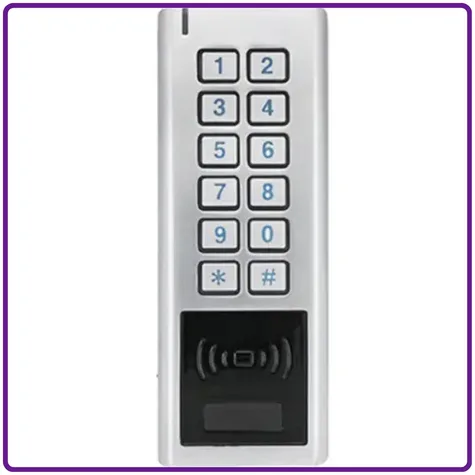
Where doors integrate with access control readers, activation may also occur via:
- card or fob readers
- intercom call buttons
- keypad entry systems
Installers should confirm these triggers still activate the door correctly.
3. Tracks, Rollers, and Mechanical Components
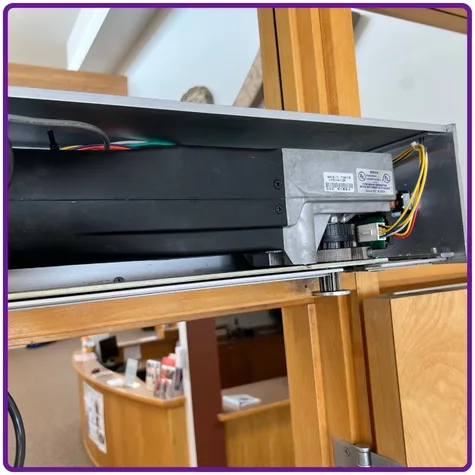
Automatic sliding doors rely heavily on mechanical components that operate continuously.
Typical maintenance inspection points include:
- Track cleanliness and debris buildup
- Belt condition and tension
- Fixings and mounting brackets
Dust and small debris can accumulate inside tracks over time. In retail or external entrances, dirt from outside foot traffic is a common cause of premature wear.
Installers often vacuum or wipe tracks during maintenance visits to prevent small obstructions affecting door movement.
4. Safety Systems and Emergency Functions
Safety systems are among the most critical elements of automatic door maintenance.
Maintenance teams should verify:
- Emergency break-out functionality (if installed)
- Correct operation during power failure
- Connection with fire alarm systems
For example, some automatic doors release or unlock automatically during a fire alarm activation to allow evacuation routes to remain clear.
Where doors form part of an escape route, maintenance checks should confirm the door behaves correctly when fire systems activate.
5. Access Control Integration
In many modern buildings, automatic doors operate as part of a wider access control system rather than simply opening via motion detection.
Maintenance checks in these cases include:
- Door release signals from access control panels
- Reader operation (fob, card, keypad, or intercom)
- Timing settings for door opening duration
- Lock release coordination with door movement
A common issue occurs when lock release timing does not match the door operator timing, which can cause damage to the door motor.
Facilities teams managing both systems should ensure configuration changes on the access control side do not unintentionally affect door behaviour.
6. Door Leaves and Physical Condition
The visible parts of the door also require inspection.
This includes checking:
- Glass panels for cracks or damage
- Door seals and brush strips
- Frame stability and alignment
- Signage and safety markings
- Doors that have dropped
Loose seals or worn brush strips can allow drafts and debris into the door track area, accelerating wear on internal components.
In public-facing entrances, safety markings on glass doors must remain clearly visible to prevent accidental collisions.
Maintenance Frequency and Inspection Planning
Automatic door maintenance frequency usually depends on traffic levels and building use.
Typical guidance used by facilities teams includes:
- Quarterly checks for high-traffic entrances (offices, retail, hospitals)
- Biannual checks for moderate usage buildings
- Annual inspections for low-traffic internal doors
Installers often combine automatic door servicing with wider access control system inspections, since both systems interact at entry points.
Maintenance logs should record:
- inspection date
- technician findings
- adjustments or parts replaced
- recommended follow-up work
Keeping accurate records supports compliance reviews and simplifies troubleshooting later.
Practical Takeaways
Reliability:
Regular maintenance reduces unexpected failures during busy periods, particularly at main entrances.
Safety:
Sensor alignment, safety stops, and fire alarm integration must be tested consistently.
Operational management:
Maintenance logs help facilities teams track recurring issues and coordinate servicing.
Installation considerations:
Buildings planning automatic doors alongside access control systems should consider integration during design rather than after installation.
Who benefits most:
Facilities managers, estates teams, and installers responsible for multi-entry buildings with automated entrances.
Conclusion
Automatic door maintenance affects far more than the physical movement of a door. In modern buildings, these systems sit within a wider framework of access control, safety systems, and daily building operations. A door that opens reliably, responds correctly to sensors, and integrates properly with access control helps maintain safe and efficient entry points.
A structured automatic door maintenance checklist allows facilities teams and installers to identify small issues before they develop into operational disruptions. Regular inspection of sensors, mechanical components, safety functions, and access control integration supports both reliability and compliance.