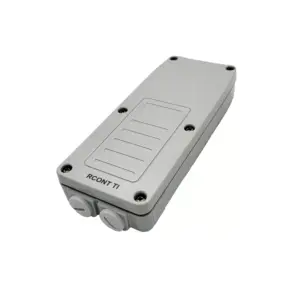


BAND-T 1st Generation Safety Transmitter
£48.32 ex VAT
Radioband BAND-T . 1st Generation Wireless Safety Edge Transmitter
Simplify your safety installations with the Radioband wireless safety edge transmitter. Designed to deliver reliable wireless safety for swing gates, sliding gates, barriers, and roller shutters.
By removing the need to hardwire safety edges back to the control panel, it saves time, reduces installation complexity, and keeps setups clean and efficient.
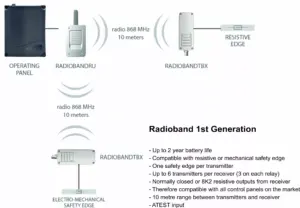
Perfect for both new installations and retrofits, the BAND-T works seamlessly with the 1st generation BAND-R receiver to create a dependable wireless safety system. Just connect your safety edge to the transmitter, link the receiver to your control panel, and pair them. It’s that easy!
Key Features:
- Wireless safety solution for gates, barriers, and shutters
- Eliminates hardwiring of rubber safety edges
- Quick and simple setup: connect, pair, and go
- Supports up to 6 transmitters per receiver (3 per relay)
- Compatible with both mechanical and resistive safety edges
Compatibility:
- Designed for use with 1st generation BAND-R receivers only
- 10-metre range.
- Power: Two AA-type 1.5 Vdc batteries.
- 12mA operating consumption.
- Operating temperature -20 °C – +85 °C (version up to -40 °C).
- IP65 airtightness
- Box dimensions: 160 x 53 x 20 mm.
▪ 4 beeps every 10 seconds from receiver/control panel
Answer:
- Change the batteries in the transmitter(s).
- Another transmitter is stored in the memory. Reset the receiver and re-program the transmitters.
▪ Replacing an old or faulty transmitter
Procedure:
- You must first reset the receiver to delete the faulty transmitter out of its memory.
- Then program your transmitter(s) as per the manual.
▪ After programming the system, the gate or door won’t close/open
Solution:
If transmitter(s) are programmed to relay 1, the R1 LED in the receiver should be OFF in standby and turn ON when an edge is pressed.
If transmitter(s) are programmed to relay 2, the R2 LED should be OFF in standby and turn ON when an edge is pressed.
When the R1 or R2 LED is ON, the corresponding relay output is activated.
If no safety edge is programmed to a relay, the LED will be ON.
If this is the case, the system is working. Check the wiring from the receiver to the gate or door control panel. Refer to the gate/door panel manual or contact the manufacturer.
If this isn’t the case and the R1 or R2 LED is ON in the receiver when an edge isn’t pressed:
- Ensure the jumper in the transmitter is in the correct position for the type of safety edge being used (OFF for resistive, ON for N.C Mechanical). If the jumper position is incorrect, or was incorrect at the time of programming, you must reset the receiver and re-program the transmitters.
- Reset the receiver and program one transmitter at a time to identify which transmitter or safety edge is the problem.
- Disconnect the safety edge from the transmitter and put an 8K2 resistor across the terminals. If this works, it indicates a fault with the safety edge.
- If the issue persists, you likely have signal interference. Upgrade to RADIOBAND 3G.
▪ Relays activating randomly
Answer:
- This is likely caused by interference. Upgrade to RADIOBAND 3G.
▪ My safety edge is measuring 8K2 Ohms but is showing as activated/pressed
Answer:
- Disconnect the safety edge from the transmitter and put an 8K2 resistor in its place, if the system works normally, the issue is the safety edge.
- On rare occasions, even though a safety edge measures the correct resistance with a multi-meter, there can still be an issue with it, such as a small nick in the rubber.
▪ Battery life is poor
Solution:
Batteries should last 1-2 years
- If the batteries are draining quickly, the transmitter will need replacing.
- If out of warranty, please purchase another.
- If in warranty, please send us pictures of the transmitter in situ. (With the cover on and off).
- If transmitter has been installed correctly and is in a suitable condition, we will give you a returns number to return the item for replacement.
▪ 7 beeps from the receiver when trying to program a transmitter
Answer:
- The memory is full. It is possible to program 3 transmitters per relay.
▪ How do I connect the receiver to a normally closed stop or photocell input on the control panel?
Answer:
- Relay 1 – R1 & R1 terminals. Relay 2 – R2 & R2 terminals. Jumpers set to CS1 & CS2.
- Relay output may need wiring in series with the photocell or stop button.
▪ How do I connect the receiver to an 8K2 resistive safety edge input on the control panel?
Answer:
Relay 1 – R1 & R1 terminals. Relay 2 – R2 & R2 terminals. Jumpers set to BS1 & BS2.
▪ Can I connect more than one safety edge to a transmitter?
Answer:
- You cannot connect more than one resistive edge.
- You can add ‘through edges’ which are edges without the resistor. You have one normal resistive edge furthest from the transmitter and through edges in series, effectively creating one large 8K2 edge.

| Weight | 0.160 kg |
|---|---|
| Dimensions | 160 × 53 × 20 mm |
Related products
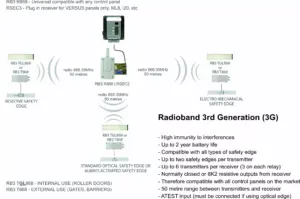
RB3 R868 3rd Generation Radioband Safety Edge Receiver
£55.79 ex VAT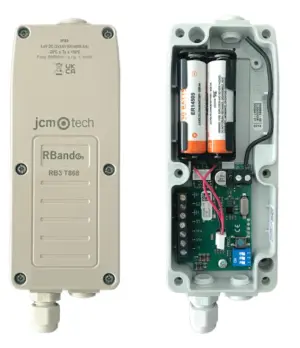
RB3 T868 3rd Generation Safety Edge Transmitter
£55.79 ex VAT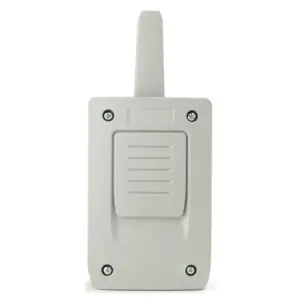
BAND-R 1st Generation Radioband Receiver
£48.32 ex VAT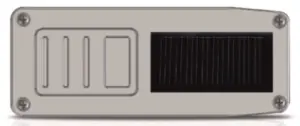
RBAND SPC Solar safety edge Panel Cover For BAND-T
£31.22 ex VAT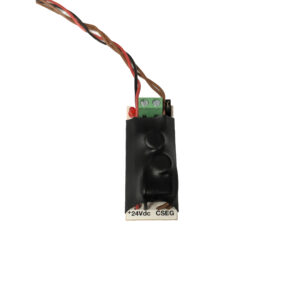
TBAND24DC 8K2 to N.C Converter
£26.04 ex VAT