


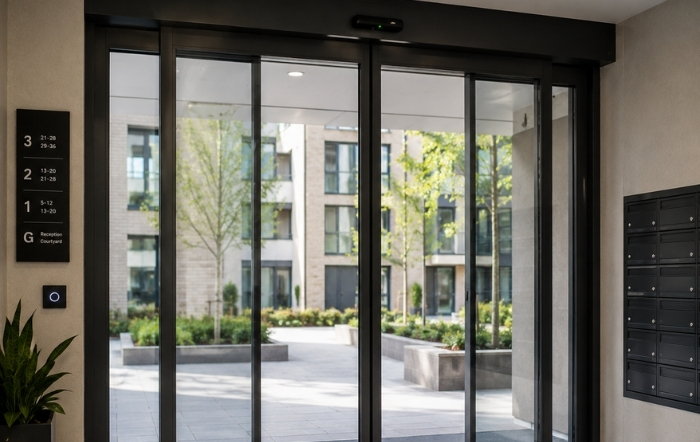
Managing entry points across a building shared by multiple businesses or residents is not as complicated as it might seem. If you are responsible for a small commercial unit with three tenants or a larger mixed-use development, access control for multi-tenant buildings does not need to be expensive, over-engineered, or difficult to manage.
Getting access control right starts with understanding your building’s access zones and the hardware that suits each one. This section covers the core principles of specifying access control for shared environments, from keypads and proximity readers to maglocks and electric strikes, and how to choose between them for multi-tenant setups. It also covers the compliance requirements you can’t afford to overlook, including fire escape routes and accessible entrances. From a small mixed-use unit to a larger commercial development, this guide will help you get it right from the start.
Why Multi-Tenant Buildings Present Unique Access Challenges
In a single-occupancy building, access control is relatively straightforward. One organisation, one set of users, one set of requirements. Multi-tenant environments are different. Each tenant may have different operating hours, different staff numbers, and different security requirements, all within the same physical space.
Common Challenges
- Controlling who can access shared areas versus private tenanted spaces
- Managing credential changes when staff leave or tenants move out
- Maintaining fire escape compliance across all exit points
- Providing a professional first impression at entrance points
Fortunately, access control for multi-tenant buildings has become significantly more accessible in recent years. Simple, scalable systems now exist that address all of these pain points without requiring a full building management platform or specialist ongoing maintenance.
Understanding Access Zones in Shared Buildings
Before choosing any hardware, it helps to map out the different access zones in the building. A typical multi-tenant commercial premises might include:
Shared Entrance
Where all tenants, visitors, and delivery personnel arrive.
Communal Corridors and Stairwells
Accessible to all building occupants.
Shared Facilities
Toilets, kitchens, or meeting rooms available to multiple tenants.
Private Tenanted Spaces
Areas requiring access restricted to that tenant’s personnel only.
Good building access control separates these zones clearly. The main entrance might use a coded keypad or proximity reader, while individual office doors have their own credentials issued and managed by the relevant tenant. This tiered approach keeps administration simple and avoids the need for a centralised system that every tenant is dependent on.
Core Hardware Options for Multi-Tenant Access Control
Access control for multi-tenant buildings does not require a network-connected, software-managed system in every case. For simpler setups, standalone hardware is often the most practical and cost-effective route.
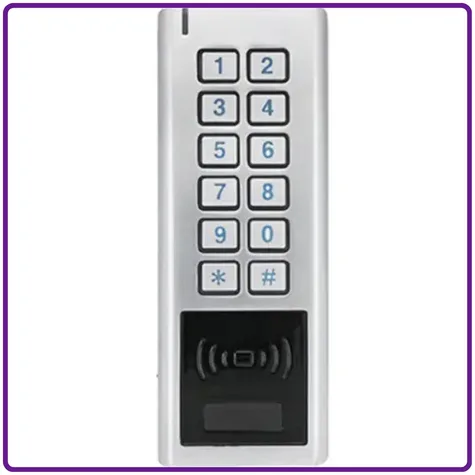
Keypads
Standalone keypads are one of the most commonly used solutions for building access control in smaller multi-tenant setups.
Benefits include:
- No software required
- Simple installation
- Easy PIN code changes
- Suitable for shared entrances, car parks, and communal storage areas
- Support for multiple user codes
Proximity Readers and Fobs
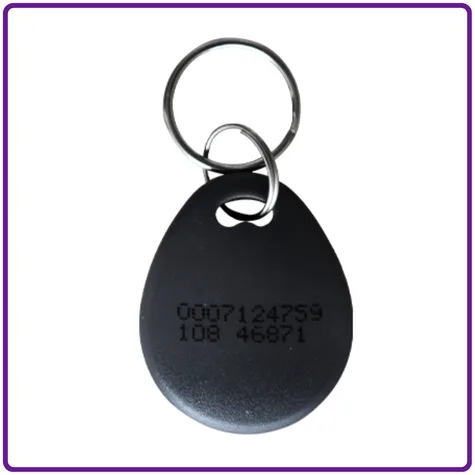
Proximity readers paired with RFID fobs or cards offer an alternative:
- Contactless access
- Individual credentials for each user
- Easy removal of access rights when staff leave
Maglocks and Electric Strikes
The locking hardware itself is as important as the credential method.
Maglocks
- Surface-mounted
- Use magnetic force to secure the door
- Fail-safe operation
- Release automatically during power failures (unless battery backup is installed)
- Well suited to fire escape routes
Electric Strikes
- Installed within the door frame
- Operate with the existing latch
- More discreet appearance
- Ideal for offices and internal doors
Both can be paired with keypads, readers, or complete access control kits.
Exit Buttons and Break Glass Units
Controlled doors on fire escape routes must allow free egress.
Exit Buttons
Provide occupants with a simple method of releasing the door from inside.
Break Glass Units
Provide an emergency override that releases the door without requiring credentials.
Both are essential for compliance with fire safety regulations.
Shared Entrance Solutions That Keep Things Simple
The main entrance is often the busiest and most visible access point in a multi-tenant building. It needs to be secure without creating friction for everyday users.
For most small to medium sized buildings:
- A keypad or proximity reader
- Paired with a maglock or electric strike
- Wireless doorbell
provides an effective and low-maintenance solution.
Additional Options
Audio or Video Door Entry Systems
Allow tenants to grant or deny visitor access from their own units.
Automatic Door Operators
Useful for compliance with Part M and BS 8300 accessibility requirements.
Touchless Entry Sensors
Ideal for healthcare facilities and food-preparation environments where hygiene is a priority.
Managing Credentials Across Multiple Tenants
Credential management is often one of the biggest concerns in multi-tenant buildings. Questions commonly arise around:
- Tenant turnover
- Staff changes
- Access permissions
- System administration
Recommended Approach
A practical solution is to divide responsibilities:
- Building owners or managing agents control shared-area credentials
- Individual tenants manage access to their private spaces
This prevents a single tenant change from requiring updates across the entire building.
Alternatively, networked or 4G cloud based access control systems can allow simple and instant control over access rights through all doors, and can be managed by the building manager.
Compliance Considerations for Multi-Tenant Buildings
Any access control installation in a multi-occupancy property must account for fire safety and accessibility requirements.
-
Free Egress on Fire Exit Routes
Controlled doors must:
- Release automatically on fire alarm activation
- Allow free egress at all times
- Include exit buttons or break glass units
Maglocks are often suitable due to their fail-safe operation.
-
EN 13637
Covers electrically controlled exit systems used on escape routes.
-
Approved Document M and BS 8300
These standards address accessible building design and may require:
- Automatic door operators
- Low-energy swing door operators
- Solutions suitable for users with mobility impairments
-
UKCA Marking
Products should carry UKCA marking where applicable to demonstrate compliance with UK regulations.
Involving a qualified installer early helps avoid costly modifications later.
Ready-to-Install Kits for Straightforward Building Access Control
Access control kits provide a convenient starting point for installers and facilities managers. These bundles typically include:
- Reader or keypad
- Maglock or electric strike
- Power supply
- Necessary accessories
Using a kit reduces compatibility issues and speeds up installation.
Building access control kits are available for a wide range of applications, from internal office doors to external entrance doors. Using the same product range throughout a building can simplify installation and maintenance.
Where different security levels are required, keypads and proximity readers can be mixed throughout the building.
When a Simple System Is No Longer Enough
Standalone systems are ideal for many smaller properties, but there are situations where a networked or software-managed system becomes worthwhile.
Consider Upgrading When:
- The building has 10 or more controlled doors
- Audit trails are required
- Time-restricted access is needed
- Remote credential management is desired
Even with advanced systems, the physical hardware often remains the same. The primary difference is the software and control infrastructure behind it.
Choosing the Right Products and Supplier
For long-term reliability, product quality matters. Entrance doors and communal areas experience high levels of daily use, making durability essential.
What to Look For
- Complete hardware range
- Consistent product compatibility
- Reliable technical support
- Assistance with specification and compliance
A supplier offering all system components from a single source can simplify specification, ordering, installation, and maintenance.
Conclusion
Access control for multi-tenant buildings does not need to be complicated. By dividing the building into clear zones, selecting the right credential method for each area, and choosing hardware designed for the required duty cycle, it is possible to create a secure, compliant, and manageable system.
Key Takeaways
- Define clear access zones
- Choose the appropriate credential method
- Use quality hardware designed for frequent use
- Ensure fire safety compliance
- Consider ready-to-install kits for simpler projects
- Plan for future expansion where necessary
Keypads, proximity readers, maglocks, and electric strikes remain the core building blocks of effective access control for multi-tenant buildings. Simplicity, clear responsibility, and reliable hardware form the foundation of a system that works for everyone involved.
For help choosing the right products for your project or to discuss installation requirements, get in touch with our team.