


Introduction
Understanding automatic gate regulations UK requirements is an important part of operating automated entrances safely. Powered gates combine heavy moving components with environments where pedestrians and vehicles may pass through frequently. Without the correct safety measures in place, the risk of trapping, crushing, or impact can increase significantly.
Adding appropriate safety devices is therefore not simply a technical upgrade. In many cases it is necessary to meet legal safety obligations and ensure that automated entrances operate reliably within workplaces, residential developments, logistics yards, and shared commercial sites.
Within a wider access control environment, automated gates often act as the outer layer of a property’s security infrastructure. They typically operate alongside systems such as intercoms, vehicle credentials, and barrier controls. Safety devices form the protective layer that ensures these automated systems can function without introducing unnecessary hazards.
This article explains how safety devices are added to automated gates, how they operate in real installations, and what should be considered when reviewing or upgrading existing gate systems.
Why Safety Devices Matter Under Automatic Gate Regulations UK
Under automatic gate regulations UK guidance, automated gates are treated as machinery and must meet the requirements of the UK Supply of Machinery (Safety) Regulations. In practice, this means that any powered gate must be designed and installed in a way that prevents injury during normal operation.
Many older installations were fitted before current expectations around machine safety were widely applied to gates. As a result, retrofitting safety devices is one of the most common upgrade tasks encountered during maintenance reviews or site safety audits.
Typical risks that safety equipment addresses include:
- Crushing between the gate and a fixed structure
- Shearing points at hinge or sliding mechanisms
- Impact with pedestrians or vehicles
- Entrapment during gate closing cycles
- Uncontrolled operation caused by sensor failures
Safety devices act as detection layers that either stop or reverse gate movement when a hazard is detected.
Types of Safety Devices Commonly Added to Automated Gates
Different gate layouts require different combinations of safety components. Installers rarely rely on a single device to manage all hazards.
Safety Edges
Pressure-sensitive safety edges are one of the most common additions to powered gates.
These flexible strips are mounted along areas where contact could occur, such as:
- Leading edges of swing gates
- Closing edges of sliding gates
- Posts or fixed surfaces where a gate could trap someone
When pressure is detected, the edge sends a signal to the control board which immediately stops and usually reverses the gate.
In practice, installers must consider cable routing carefully. Moving gates require flexible cabling systems or wireless safety edge transmitters to avoid cable fatigue over time.
Edges can be made wireless with Radioband, which simplifies the installation process as is it not necessary to run a cable between the safety edge and control panel.
Maintenance teams should periodically check:
- Edge responsiveness
- Cable damage or stretching
- Signal reliability in wireless models
- Water ingress
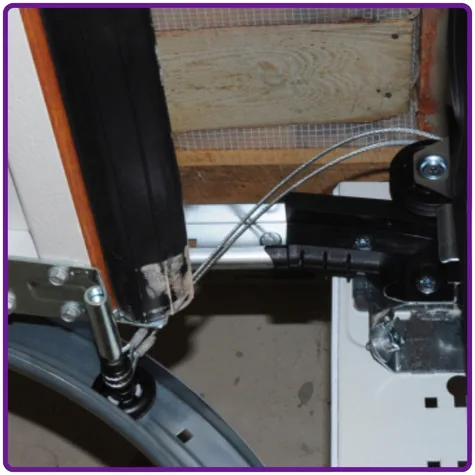
Safety edges are fail safe, meaning any failure in the edge results in the gate being unable to move. Whilst this is essential from a safety viewpoint, non operational gates can cause access and security issues so regular maintenance is essential to reduce problems.
Photocells and Light Curtains
Photocells are infrared sensors positioned across the gate opening. If the beam is broken, the gate either refuses to open or close or stops its movement. Multiple pairs are often used.
They are widely used because they protect the entire opening area rather than a specific contact point, and are a form of non contact safety.
Typical positioning includes:
- Across the driveway entrance
- At pedestrian height near gate posts
- Inside the property line to detect vehicles waiting behind the gate
Larger entrances sometimes use light curtains rather than single beams. These create multiple vertical detection points and offer greater protection in high-traffic areas.
Environmental conditions are an important consideration. Dust, rain, or direct sunlight can occasionally interfere with the sensor’s sender and receiver.
Facilities teams responsible for routine checks should confirm:
- Sensors remain aligned
- Lenses are clean
- Mounting brackets remain stable
Misaligned photocells are a frequent cause of unexpected gate behaviour.
Force Limitation Systems
Modern automated gates often use motor controllers that monitor operating force. If the gate encounters unexpected resistance, the controller halts movement.
However, force limitation alone is rarely sufficient for compliance with automatic gate regulations UK expectations. It typically works alongside safety edges and detection sensors rather than replacing them.
Force testing is required during commissioning or periodic inspections. Specialist equipment measures the pressure exerted by the gate during movement.
Induction Loops for Vehicle Detection
Vehicle detection loops are embedded in the ground and detect the presence of metal objects above them.
These loops are commonly used to prevent gates closing on vehicles waiting near the entrance. When a car remains within the detection zone, the system prevents the gate from closing.
This is particularly useful in:
- Logistics yards
- Multi-tenant office car parks
- Industrial loading areas
Installers must consider loop positioning carefully. Loops placed too close to the road may detect passing traffic, while loops too far inside the site may not detect vehicles waiting to exit.
Ground works are usually required to install these systems, so they are often added during gate refurbishment rather than small upgrades. However AES wireless ground loops are now available which negates the need for ground works, making for a quicker, easier and less disruptive installation.
Loop detectors are used as supplementary safety, alongside safety edges and beams.
Common Mistakes When Retrofitting Gate Safety Devices
Retrofitting safety devices is not always straightforward. Several recurring issues appear during site assessments.
Assuming One Device Is Enough
A common misunderstanding is that installing a single photocell satisfies safety requirements.
In reality, most gates require multiple safety layers to address different hazard zones.
For example:
- Photocells protect the opening area
- Safety edges protect the gate leaf
- Force monitoring protects against unexpected resistance
Each addresses a different risk.
Ignoring Hinge and Closing Zones
Installers sometimes focus on the entrance opening while overlooking hinge points or rear swing areas.
These areas can create significant trapping risks, particularly on inward-opening swing gates.
Additional safety edges or guards may be required depending on the design.
Poor Cable Protection
External gate systems are exposed to weather, vibration, and vehicle movement.
Cabling associated with safety devices must be routed carefully using:
- Flexible conduits
- Protective trunking
- Proper strain relief
Cable damage can disable sensors without obvious signs to building occupants.
Integration with Access-Control Systems
Safety devices operate independently from access-control permissions.
A gate may recognise authorised entry through:
- intercom systems
- keypad credentials
- vehicle tags
- fob readers

However, the safety layer must override these commands if a hazard is detected.
For example, a gate closing after authorised entry must stop if a pedestrian walks through unexpectedly.
Facilities teams reviewing automated entrances often examine both layers simultaneously.
Maintenance Responsibilities and Ongoing Compliance
Once installed, safety devices require regular inspection.
Automated gates are not “fit and forget” equipment. Mechanical wear, weather exposure, and electrical faults can gradually reduce system reliability.
Routine checks should include:
- Testing safety edges for responsiveness
- Confirming photocell alignment
- Inspecting loop detection zones
- Reviewing controller fault logs
Sites with high usage may include gate safety checks within their routine maintenance schedules.
Facilities managers often document these checks as part of workplace safety compliance records.
Practical Takeaways
Safety devices mainly affect:
- Physical safety around moving gates
- Legal compliance under machinery safety expectations
- Reliability of automated entrances
Who benefits most from proper installation:
- Facilities and estates teams managing multiple entrances
- Installers responsible for system upgrades
- Organisations operating high-traffic vehicle access points
- The homeowner
What should be planned early:
- Safety zones around gate movement
- Cable routes for sensors and edges
- Controller compatibility with safety devices
What can be added later:
- Additional photocells
- Wireless safety edges
- Secondary detection layers
Planning these factors early reduces disruption when expanding access-control infrastructure later.
Conclusion
Compliance with automatic gate regulations UK expectations depends heavily on the correct use of safety devices. Automated entrances introduce mechanical risks that must be addressed through detection systems, force monitoring, and well-planned installation practices.
For facilities managers and installers, the most important consideration is that safety protection works across all hazard zones. Photocells, safety edges, vehicle loops, and motor monitoring each address different risks associated with gate movement.
Regular testing and maintenance are equally important. Sensors can be damaged or become misaligned, cables can degrade, and control boards may require recalibration.
When these safety layers are integrated properly, automated gates can function reliably as part of a wider access-control structure while maintaining a safe environment for pedestrians and vehicles.