


Choosing a GSM Intercom System: Network Coverage and SIM Tips
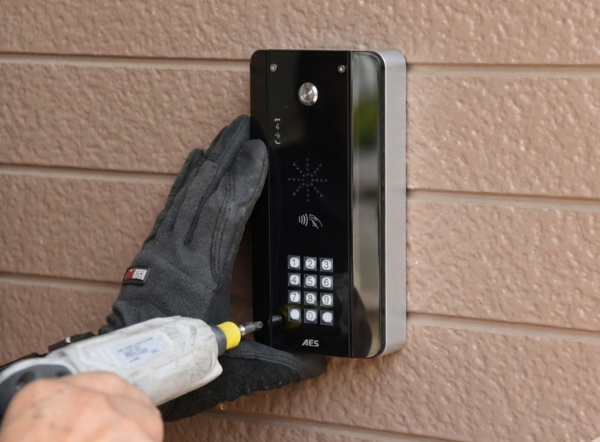
A gsm intercom system is often chosen where running data cabling is impractical, unreliable, or costly. These systems rely on the mobile network rather than a fixed IP connection, making them common on gates, remote entrances, car parks, temporary sites, and retrofit projects.
The focus here is narrow and operational: network coverage and SIM management. These two factors cause most real-world issues with gsm entry intercoms, yet they are frequently underestimated at the point of specification. This topic sits within the wider access-control and intercom landscape and connects directly to decisions around system architecture, user management, and long-term maintenance covered in the broader Quantek intercom guidance.
How GSM Intercom Systems Work in Practice
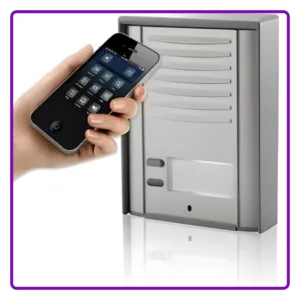
A gsm intercom system uses the mobile phone network to place calls or data sessions when a visitor presses the call button. Depending on the model, the unit may dial a fixed number, a group of numbers, or connect into a cloud portal that routes calls and logs activity. Audio (and sometimes video) is transmitted over the mobile network, and door release commands are sent back in response.
Unlike IP-based intercoms, gsm entry intercoms do not rely on the site’s LAN, switches, or firewalls. This removes one layer of complexity but introduces another: the system is entirely dependent on mobile signal strength and SIM performance. If coverage drops or the SIM is misconfigured, the intercom becomes unreliable regardless of how well the rest of the access-control hardware performs.
Network Coverage: What Actually Matters on Site
Checking coverage beyond postcode maps
Mobile coverage checkers are a useful starting point, but they are not enough on their own. Coverage can vary significantly across a single site due to building materials, terrain, nearby structures, and even seasonal foliage. A gate intercom mounted on a steel post or brick pier can experience very different signal conditions compared to a handset held at chest height during a survey.
A proper assessment involves testing signal strength at the exact mounting location using a handset on the intended network, ideally locked to 4G or 2G as required by the intercom specification. Installers often discover that moving the antenna by a few centimetres or changing its orientation improves stability.
Single-network versus multi-network resilience
Many gsm intercom systems operate on a single network SIM. This keeps costs predictable but creates a single point of failure. If that network experiences congestion or maintenance in the area, call reliability can suffer.
Multi-network or roaming SIMs reduce this risk by allowing the intercom to register on the strongest available network. This is particularly relevant on sites where reliability is critical, such as residential blocks, healthcare estates, or unmanned entrances that depend entirely on remote call handling.
External antennas and signal boosters
External antennas are often overlooked at specification stage. For outdoor or semi-enclosed locations, an external antenna mounted clear of metalwork can significantly improve call quality and connection times. Signal boosters are sometimes used, but these must be compliant with UK regulations and approved for the specific networks in use. Poorly installed boosters can introduce noise or instability rather than fixing the problem.
SIM Selection: More Than Just a Data Allowance
Voice, data, or hybrid SIMs
Some gsm intercom systems rely primarily on voice calls, while others use data for app-based answering, logging, or video streaming. Selecting a SIM with the wrong service profile is a common mistake. A voice-only SIM may block data sessions required for configuration or remote management, while a data-only SIM may not support traditional call routing.
Specification should always start with the intercom’s communication method rather than assuming a generic mobile plan will suffice.
Contract versus managed SIMs
Standard consumer or business SIM contracts can work, but they introduce administrative overhead. Bills, usage alerts, contract renewals, and suspension risks all sit with the site owner or facilities team.
Managed SIMs designed for machine-to-machine or access-control use are often a better operational fit. These typically include fixed monthly costs, remote monitoring, and alerts if the SIM goes offline. This is particularly helpful for estates teams managing multiple gsm entry intercoms across different sites.
Roaming policies and network changes
Some SIMs restrict roaming or require manual approval for network switching. This can cause unexpected outages if a network reconfigures local masts or retires older services. It is also important to confirm that the SIM supports current and planned network technologies, especially as 3G services are phased out across the UK.
Common Misassumptions That Cause Issues Later
One frequent assumption is that “any signal is enough.” In practice, marginal coverage leads to delayed call setup, dropped audio, or missed calls, all of which undermine confidence in the system. Another is that SIM setup is a one-time task. In reality, SIM management is an ongoing responsibility, especially on sites with staff turnover or changing call routing needs.
There is also a tendency to treat gsm intercoms as isolated devices. In most installations, they still interact with door controllers, power supplies, and safety hardware. A stable GSM link does not compensate for poor grounding, inconsistent power, or incorrect relay wiring.
Compliance, Safety, and Operational Considerations
A gsm intercom system forms part of the access-control decision chain. If it fails, access may become restricted. This has implications for fire safety, evacuation procedures, and accessibility.
Facilities teams should ensure that fail-safe behaviour is documented and tested, especially on entrances used outside normal hours. Any reliance on mobile connectivity should be reflected in risk assessments and maintenance plans, rather than treated as an invisible service.
Day-to-Day Management and Future Changes
From a management perspective, GSM systems can be straightforward if specified correctly. Call routing changes, number updates, and user permissions are often simpler than on legacy panel-based systems. However, scaling can introduce complexity. Adding more entrances increases SIM count, monitoring requirements, and recurring costs.
Planning for expansion early allows estates teams to standardise SIM providers, antenna types, and maintenance processes rather than reacting site by site.
Practical Takeaways
- Reliability: Network coverage testing at the mounting point matters more than postcode maps.
- Administration: Managed or multi-network SIMs reduce ongoing support issues.
- Safety: GSM intercom behaviour during outages should be understood and documented.
- Future changes: Standardising SIMs and antennas simplifies expansion across multiple sites.
Conclusion
A gsm intercom system can be a practical and reliable part of an access-control setup, but only when network coverage and SIM management are treated as core design elements rather than afterthoughts. Signal strength at the device, appropriate SIM selection, and ongoing monitoring all affect call reliability and user confidence. These choices also influence compliance planning, maintenance effort, and how easily the system adapts to future changes. When specified with the same care as door hardware and power supplies, gsm entry intercoms can integrate cleanly into wider access-control strategies without creating hidden operational risks.