


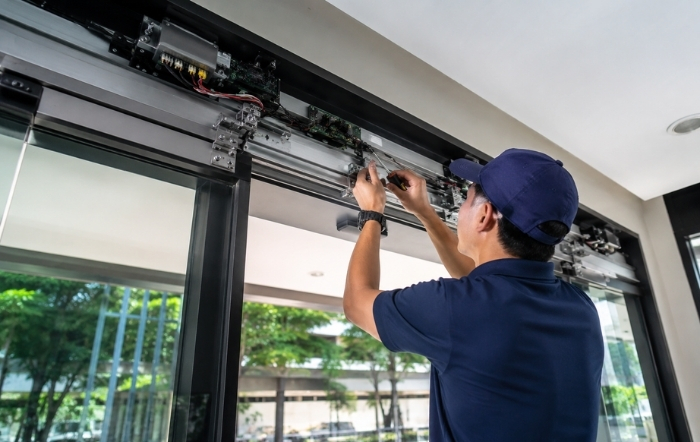
An automatic door rarely fails without warning. A worn drive belt or a misaligned sensor tends to give weeks of subtle signs before it causes a breakdown or a compliance failure during an audit. The difference between catching these signs early and missing them altogether usually comes down to whether a proper automatic door maintenance schedule is in place.
Servicing intervals are not arbitrary. They are shaped by door type, usage volume, environmental exposure, and the requirements set out in BS EN 16005 and BS EN 12453, alongside duties under the Equality Act 2010 and the Health and Safety at Work Act 1974. Building owners, facilities managers, and installers who get the schedule wrong, whether by over-servicing low-traffic doors or neglecting high-cycle entrances, end up paying for it through unplanned downtime, higher repair costs, or exposure to liability claims. The sections that follow set out exactly how often access doors should be inspected, what each service level should include, and how requirements differ across sliding doors, swing operators, roller shutters, and gate systems.
Why an Automatic Door Maintenance Schedule Matters
Automatic doors are complex mechanical and electronic systems that operate under continuous stress. Power operators, sensors, access control hardware, and safety devices all contain moving parts and electrical components that naturally wear over time. Without a structured maintenance schedule, minor issues can quickly develop into major failures, creating safety risks and costly repairs.
Compliance with UK Standards
UK regulations make regular maintenance essential:
- BS EN 16005 requires power-operated pedestrian doorsets and their safety devices to be maintained and periodically checked.
- BS EN 12453 outlines safety requirements for powered doors, including testing of force limitation and sensing devices.
Legal Responsibilities
Building owners and facilities managers have obligations under:
- The Equality Act 2010
- The Health and Safety at Work Act 1974
Doors that fail to detect obstructions, unexpectedly close, or prevent access can create significant legal liability. Regular maintenance helps minimise these risks.
Cost Benefits
Planned servicing is significantly more cost-effective than reactive maintenance. Tasks such as replacing worn parts or recalibrating sensors are far less expensive than major operator replacements or liability claims resulting from accidents.
How Often Should Automatic Doors Be Serviced?
There is no single maintenance interval suitable for every installation. The appropriate schedule depends on:
- Door type
- Usage frequency
- Environmental conditions
- Manufacturer recommendations
However, industry best practice provides a reliable framework.
Quarterly Checks (Every Three Months)
High-traffic doors in public or commercial environments should undergo quarterly inspections. These checks typically include:
- Visual inspection of door leaves, frames, and tracks
- Cleaning and testing of safety sensors and presence detectors
- Verification that doors operate within BS EN 12453 force limits
- Testing obstruction detection and reversal functions
- Checking for unusual noise, vibration, or erratic movement
- Inspecting access control hardware for wear or damage
- Recording test results for maintenance records
Quarterly inspections are especially important for:
- Supermarket entrances
- Airports
- Hospital admission areas
- Hotel revolving doors
- Outdoor automatic door installations exposed to weather and debris
Six-Monthly Service
For most installations, a six-monthly service forms the core of the maintenance programme. A qualified engineer should carry out a detailed inspection and make any necessary adjustments.
Typical Service Tasks
- Lubricating rollers, guide tracks, and drive belts
- Testing and adjusting opening and closing speeds
- Inspecting safety sensors and obstruction detection systems
- Checking electrical connections and control settings
- Testing battery backup systems
- Verifying emergency release mechanisms
- Inspecting manual override or breakout functionality
- Reviewing maintenance logs and certification
Fire and Emergency Exit Doors
For doors connected to fire alarm systems or emergency escape routes, the service should also confirm:
- Correct fail-safe or fail-secure operation
- Proper release of hold-open or free-swing modes during alarm activation
Annual Full Service
Every automatic door should receive a comprehensive annual service regardless of previous inspections.
Annual Service Activities
- Replacement of worn components
- Full performance benchmarking against original specifications
- System-wide testing across the complete operating range
- Documentation updates
- Review of whether service intervals remain appropriate based on usage changes
Annual servicing should be carried out by qualified engineers, ideally accredited by organisations such as:
These bodies provide guidance aligned with BS EN 16005 and BS EN 12453 requirements.
Service Requirements by Door Type
Sliding Automatic Doors
Commonly found in:
- Supermarkets
- Hospitals
- Retail parks
- Public buildings
Key Maintenance Focus
- Track cleaning
- Roller inspections
- Drive belt tension checks
- Sensor testing and alignment
High-cycle installations may require annual drive belt replacement.
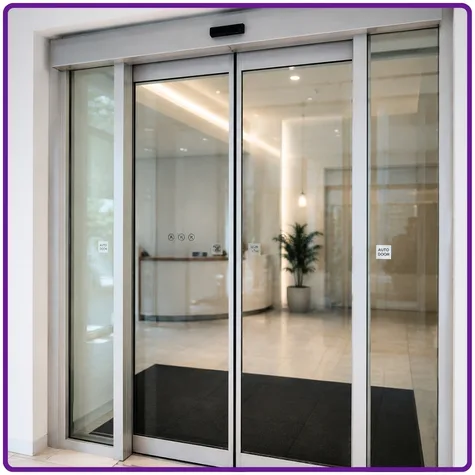
Swing Automatic Door Operators
Frequently installed in:
- Care homes
- Clinics
- Office buildings
Key Maintenance Focus
- Opening and closing force adjustments
- Operator speed calibration
- Sensor placement verification
- Timing delay adjustments
These checks help ensure compliance with accessibility requirements under Approved Document M and BS 8300.
Roller Shutter and Industrial Doors
Industrial doors often operate in harsh conditions involving:
- Dust
- Moisture
- Temperature fluctuations
Recommended Maintenance
Quarterly Checks
- Curtain slat inspection
- Guide rail examination
- Safety edge testing
- Limit switch verification
- Manual override checks
Annual Service
- Motor inspection
- Comprehensive safety system testing
Gate and Barrier Systems
Automated gates and barriers present significant safety risks due to crushing and shearing hazards.
Recommended Maintenance
- Minimum six-monthly servicing
- Quarterly inspections for high-use sites
Key checks include:
- Photocell alignment
- Safety edge continuity
- Force limitation testing
- Battery backup verification
Compliance with BS EN 12453 is particularly important for these systems.
Maintenance Records: What Should Be Kept?
A maintenance schedule is only effective when properly documented.
Essential Records
Each service visit should include:
- Date of inspection or service
- Details of work completed
- Engineer name and qualifications
- Safety test results
- Components replaced or adjusted
- Outstanding issues requiring attention
- Confirmation of compliance with applicable standards
- Recommended next service date
Maintenance records should be retained for the lifetime of the installation. They can provide critical evidence in the event of an accident investigation or insurance claim.
User Responsibilities Between Services
Scheduled maintenance does not remove the need for routine operational monitoring.
Facilities teams should regularly:
- Listen for unusual sounds
- Observe changes in opening or closing speeds
- Ensure sensors remain clean and unobstructed
- Keep door surroundings clear
- Report visible damage immediately
- Verify emergency release systems remain accessible
Any concerns should be referred to a competent engineer. Safety devices should never be bypassed or adjusted by unqualified personnel.
Factors That Influence Service Frequency
Standard service intervals should be adjusted based on site-specific conditions.
Usage Volume
A door operating 500 times per day will wear significantly faster than one operating 50 times per day. Modern operators often include cycle counters to monitor usage accurately.
Environmental Exposure
More frequent servicing may be required for doors installed in:
- Coastal locations
- Industrial environments
- Outdoor exposed areas
These settings accelerate corrosion and contamination.
Door Age
Older systems often require more frequent inspections as components approach the end of their service life.
Occupant Vulnerability
Buildings serving:
- Elderly users
- Disabled users
- Young children
should generally adopt more conservative maintenance schedules due to increased safety considerations.
Regulatory Requirements
Certain sectors, including healthcare facilities, may have additional servicing obligations beyond general industry guidance.
Manufacturer Recommendations
Always follow the maintenance schedule specified by the door operator manufacturer, particularly where individual components have prescribed replacement intervals.
Conclusion
A consistent automatic door maintenance schedule is essential for safety, compliance, and long-term reliability. As a general rule:
- Quarterly inspections are recommended for high-traffic doors.
- Six-monthly servicing should be carried out on all automatic door installations.
- Annual full servicing should be completed by qualified engineers and supported by thorough documentation.
Compliance with BS EN 16005, BS EN 12453, and broader health and safety legislation all point towards the same conclusion: regular, documented maintenance is critical. Understanding how often automatic doors should be serviced is only the first step. Consistently implementing a structured maintenance programme is what keeps buildings safe, accessible, and compliant.
Whether you are planning a new installation, reviewing an existing maintenance contract, or addressing long-overdue servicing requirements, establishing the correct maintenance schedule from the outset will reduce risk, minimise costs, and improve long-term performance. For help with your project or installation requirements, contact our team.